Introduction: The Month-2 Cliff
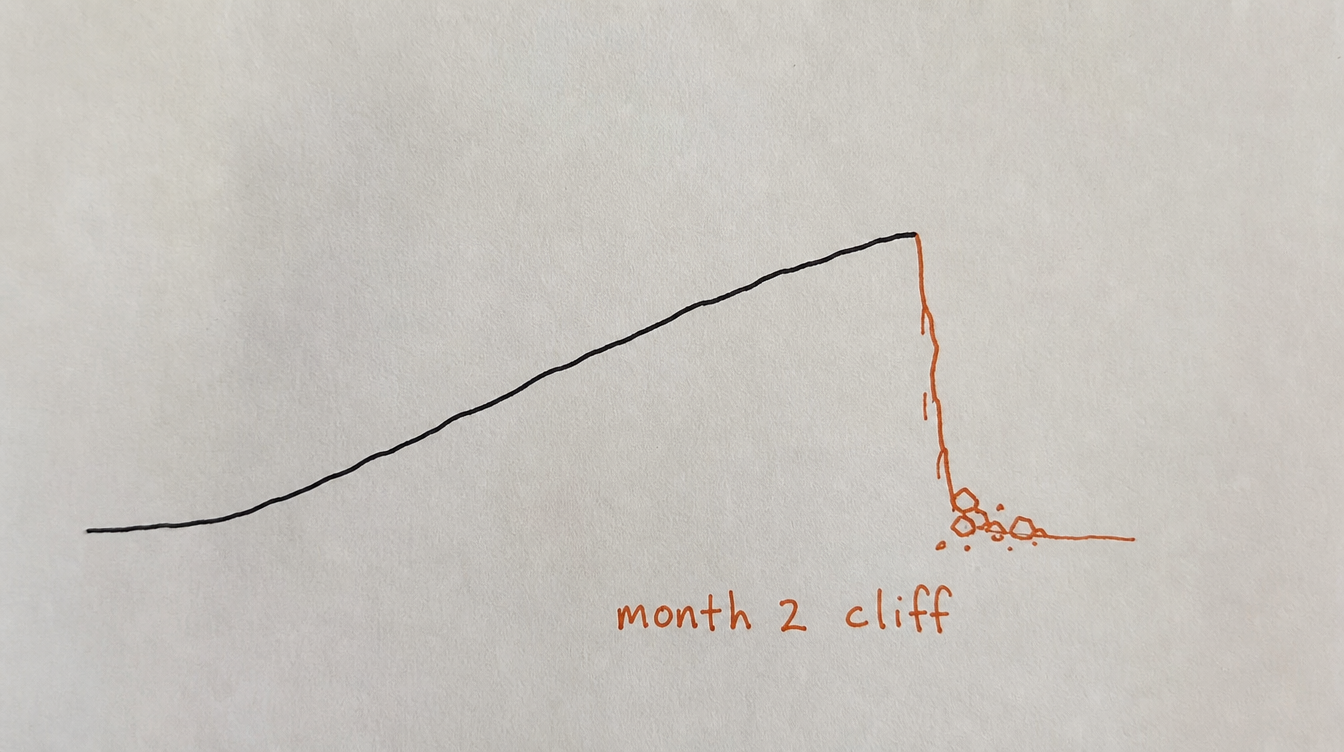
Here's a pattern most paid Skool community owners see:
- Month 1: new members are excited, they post, they comment, they feel the momentum
- Month 2: the novelty wears off. They've seen the main content. Activity drops.
- Month 3: billing hits. They ask "am I still getting value?" and the answer is often "not really."
If you're searching:
- skool retention strategies
- how to keep members in skool
- reduce churn skool community
- why members leave after first month
You probably already solved onboarding. Your members start strong. The problem is they don't stay strong. This post is specifically about what happens after the honeymoon period ends.
1. Why Month 2 Is the Danger Zone
Month 1 retention is mostly about onboarding. Did they understand what to do? Did they post? Did someone reply?
Month 2 retention is about something different: ongoing perceived value.
After 30 days, the "new community" excitement fades. Members have seen your main content, attended a few events, and gotten the quick wins. Now they're asking a harder question: "What does month 3 look like? And month 6?"
If the answer is "more of the same," they leave. Not because your community is bad, but because they feel like they've already gotten what they came for.
The strategies below solve this by creating continuous forward motion, not just a one-time onboarding experience.
2. The "Value Plateau" Problem
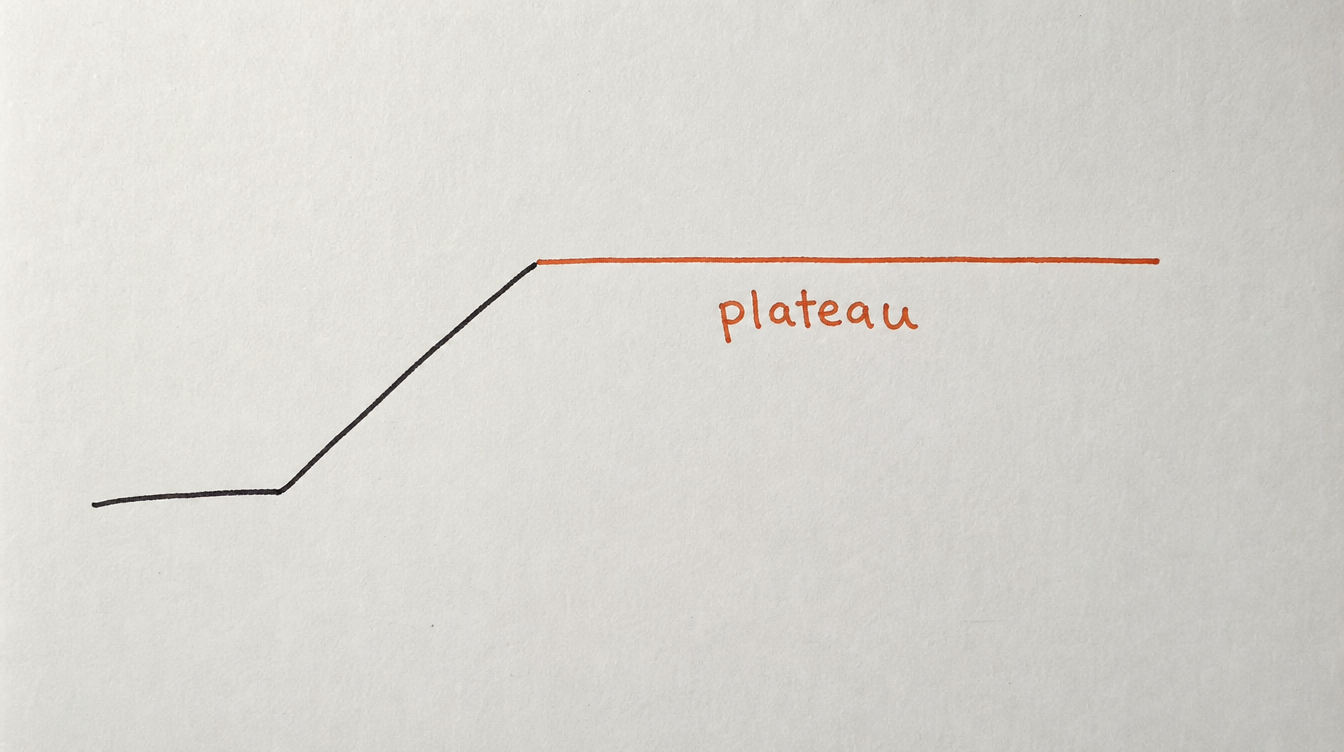
Every community hits a value plateau. It's the point where a member has consumed the main resources and engagement feels optional rather than essential.
Signs of a value plateau:
- Members log in less frequently (from daily to weekly to never)
- Comments per post drop (they've "heard it before")
- Classroom progress stalls at 50-70% completion
- Members stop replying to DMs
The fix is not "more content." More content creates more stuff to ignore. The fix is a progression system that makes staying feel like continued growth, not repeated consumption.
3. Strategy #1: Progressive Content Unlocks

Instead of giving members access to everything on day 1, drip content over time.
How it works:
- Week 1-2: Foundations (modules 1-3)
- Week 3-4: Intermediate (modules 4-6, unlocked after completing foundations)
- Month 2: Advanced (modules 7-10, unlocked based on progress or time)
- Month 3+: Expert content, case studies, mastermind access
Why it works: members always have something "coming next." They can't get everything in month 1 and feel done. There's always a reason to stay for the next unlock.
Implementation: Skool's classroom supports this partially (you can rearrange modules). For true time-based unlocking, you need a workflow that grants access or sends a DM when the member hits a milestone.
4. Strategy #2: Milestone Celebrations and DMs
People stay where they feel recognized. A simple DM at key milestones creates emotional stickiness that content alone can't.
Milestones to celebrate:
- First post (acknowledge the courage to start)
- 7 days active (they made it through week 1)
- 30 days as a member (survived the danger zone)
- First win shared (recognize their progress)
- Level-up on leaderboard (gamification payoff)
- Helped another member (peer contribution)
Example milestone DM (30-day mark):
Hey {{first_name}}, you just hit 30 days in [community]!

Quick recap of what you've accomplished:
- [X] posts
- [Y] comments
- Completed [module name]

That puts you in the top 30% of members for first-month
engagement. Solid start.

Here's what I'd focus on in month 2: [specific suggestion
based on their activity or segment]

Keep going.
Implementation: automate these with a workflow triggered by time (30 days since join date) or by tag/event (completed module, hit points threshold).
5. Strategy #3: Peer Connections (Reduce Dependency on You)
If you are the only reason members stay, your community is fragile. One week you get busy, engagement drops, and members leave because "it got quiet."
The strongest retention force is peer-to-peer relationships. When members know and care about other members, they stay for the people, not just the content.
How to build peer connections:
- Accountability partners: pair members with similar goals in month 2
- Member spotlights: weekly post highlighting a member's story or win
- Help threads: structure posts so members answer each other, not just you
- Small groups: create sub-groups of 5-8 members with shared interests
- Tag "ambassadors": identify highly active members and give them a role (moderator, mentor, welcomer)
When a member has 2-3 people they regularly interact with, their churn probability drops dramatically. They're no longer "in a community." They're "in a group of friends who happen to use this platform."
6. Strategy #4: Monthly Challenges and Reset Events
Monthly challenges create recurring engagement peaks. They give members a reason to come back at the start of each month, even if they drifted off at the end of last month.
How to structure a monthly challenge:
- Day 1: announce the challenge, explain the rules, ask members to commit
- Daily/weekly: short prompts or tasks related to the challenge
- End of month: celebration post, results roundup, winner recognition
Example challenges:
- "30 posts in 30 days" (low friction, builds habit)
- "Finish Module 5 by month-end" (course completion drive)
- "Help 3 other members this month" (peer connection builder)
- "Share one win every Friday" (ritual builder)
Why it works: challenges create a sense of time-bound urgency that flat, evergreen content doesn't. They also give lurkers a clear re-entry point ("I'll jump in for the challenge").
7. Strategy #5: Automated Re-Engagement at the First Sign of Silence
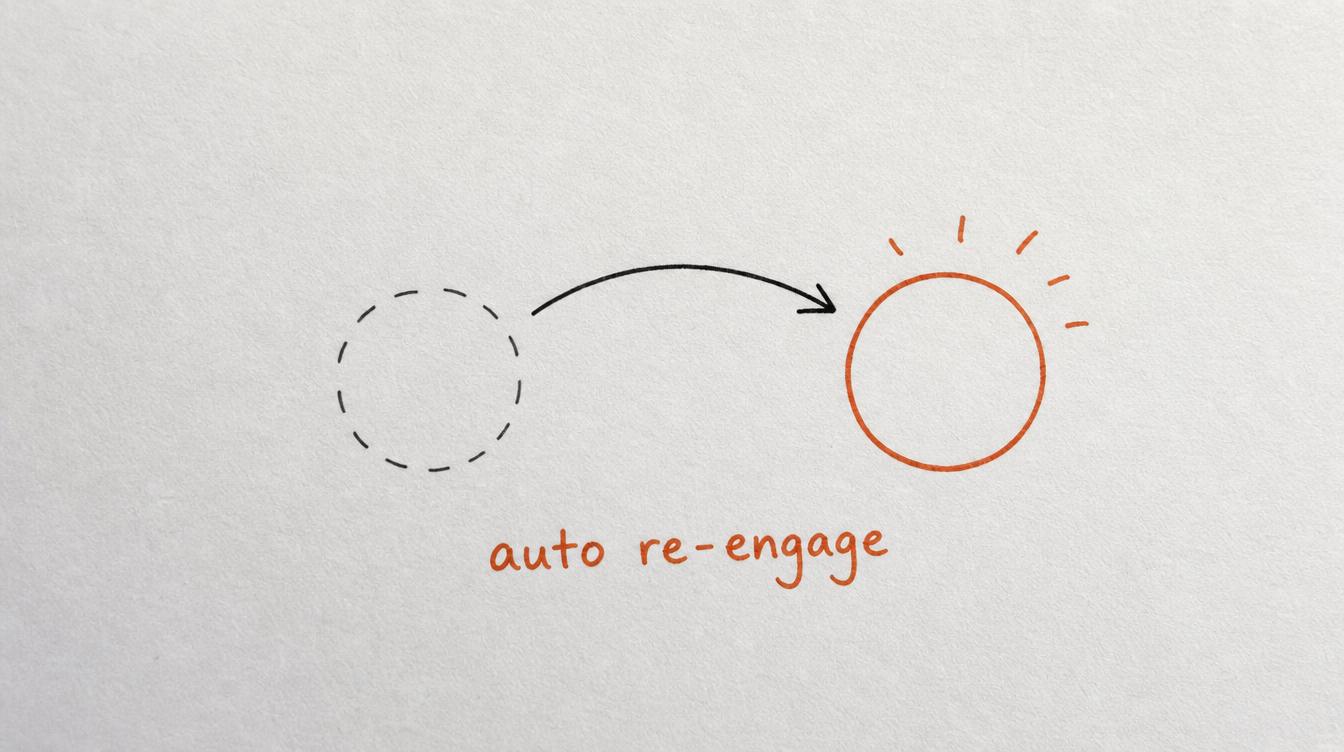
The biggest retention killer is undetected drift. A member goes quiet for a week, then two, and by the time you notice, they've mentally moved on.
Automated re-engagement catches members at the earliest signal:
- Day 7 of silence: friendly check-in DM ("Hey, everything good?")
- Day 14: resource nudge ("This thread might be relevant to you")
- Day 21: final nudge or escalation to personal outreach
You don't need to monitor your member list daily. Set up a workflow that triggers on inactivity and handles the first two touchpoints automatically. You only get involved for the members who don't respond to automation.
For the full technical setup, see: How to set up automated DMs in Skool.
For understanding the signals themselves: How to spot members about to cancel.
8. Strategy #6: The "What's Next" System
Most communities give members a starting point but no progression path. After onboarding, members are left to figure out "what now?" on their own.
A "what's next" system solves this by always providing a clear next step based on where the member is:
- Completed Module 1? DM: "Great work. Here's Module 2, which builds on exactly what you just learned."
- Active for 30 days? DM: "You've mastered the basics. Here's the advanced track."
- Helped 5 other members? DM: "You're one of our most helpful members. Want to become a mentor?"
- Hit level 5 on leaderboard? DM: "You just unlocked the exclusive mastermind thread."
Every milestone leads to the next milestone. Members never feel "done" because there's always something ahead of them.
Implementation: use auto-tagging (based on progress) combined with DM sequences triggered by those tags. Each tag represents a stage, and each stage has a "what's next" message waiting.
Related: How to auto-tag members based on behavior.
9. How StickyHive Helps With Retention
I built StickyHive because I was losing 18% of members monthly and had no system to detect or prevent it. Every strategy in this post is now part of how the tool works:
- Health scores: every member gets a 0-100 score based on behavior. You see who's at risk before they cancel.
- Auto-tagging: members get tagged as "active," "quiet," or "at-risk" based on activity. No manual tracking.
- Milestone DM sequences: trigger celebration messages at 7 days, 30 days, first post, level-up, etc.
- Re-engagement workflows: automated DM sequences that run when members go quiet.
- Churn signal detection: AI flags members showing behavioral patterns that match past churners.
- CRM view: filter members by tag, activity, health score. Take bulk actions on segments.
The combination reduces churn by catching at-risk members early and keeping engaged members progressing through value milestones.
Start Free 14-Day Trial (no card required) →
10. Frequently Asked Questions
What's a healthy retention rate for a paid Skool community?
Target 90-95% monthly retention (5-10% churn). If you're below 85% retention (above 15% churn), you have a system problem, not a content problem. The strategies in this post should get you from 85% to 92%+ within 2-3 months. See what that churn gap actually costs in dollars — the difference is bigger than most owners think.
Should I focus on getting new members or retaining existing ones?
Retention first. Always. A community with 10% churn needs 10 new members per month just to stay flat at 100 members. A community with 5% churn needs 5. Fixing retention gives you more growth from the same acquisition effort.
How do I know which strategy to start with?
Run a community audit first. If members are leaving in month 1, fix onboarding (strategy #1 and #2). If they're leaving in month 2-3, fix engagement and progression (strategies #3, #4, and #6). If they're leaving silently, fix detection (strategy #5).
Can I implement these strategies without automation tools?
Partially. You can do milestone DMs manually (at small scale), run monthly challenges with regular posts, and build peer connections through community design. But detecting silent members and auto-responding? That requires automation. The human-powered approach breaks at 100+ members.
How quickly will I see results from these strategies?
Re-engagement workflows show results within 2 weeks (you'll save members who would have quietly left). Milestone DMs and progression systems take 30-60 days to show measurable churn reduction. Monthly challenges show engagement spikes immediately but retention impact takes 2-3 months to measure.
11. Conclusion and Next Steps
Month 2 churn is solvable. The members leaving aren't bored of your content. They've lost forward momentum and nobody caught them drifting.
Your next steps:
- Set up an automated re-engagement DM at day 7 of silence (strategy #5, fastest impact)
- Create a 30-day milestone DM to celebrate members who stick around (strategy #2)
- Plan your first monthly challenge (strategy #4, creates an engagement peak)
- Identify 3-5 potential "ambassadors" and give them a role (strategy #3)
- Map your content progression so members always know "what's next" (strategy #6)
Related reading: