Introduction: Why the First Message Matters More Than the First Post
A new member joins your Skool community. They see a feed of posts from people they don't know. Maybe there's a pinned welcome thread with 200 comments they won't read. They look around for 30 seconds, feel lost, and close the tab.
Sound familiar?
If you're searching:
- skool welcome message examples
- what to DM new skool members
- onboarding DM templates skool
- best welcome sequence for community
You already know that a personal DM changes everything. The problem is knowing what to say, when to say it, and how to structure a sequence that doesn't feel robotic.
This post gives you 7 complete sequences you can copy and adapt. Each one is designed for a specific community type and goal.
1. Why Welcome DMs Reduce Day-1 Drop-Off
A welcome DM does three things that a pinned post can't:
- It's personal. A DM feels like a 1:1 conversation. A pinned post feels like a billboard.
- It gives a specific next step. Instead of "look around and figure it out," it says "do this one thing."
- It opens a reply loop. When you ask a question in a DM, the member is 5x more likely to respond than if you ask in a group post.
The data backs this up. Communities that send a welcome DM within the first hour see 40-60% higher first-week engagement compared to those that don't. The reason is simple: a DM breaks the ice before the member has to break it themselves. For the full technical setup — triggers, timing, and branching logic — see How to Set Up Automated DMs in Skool.
2. Anatomy of a Good Welcome Sequence
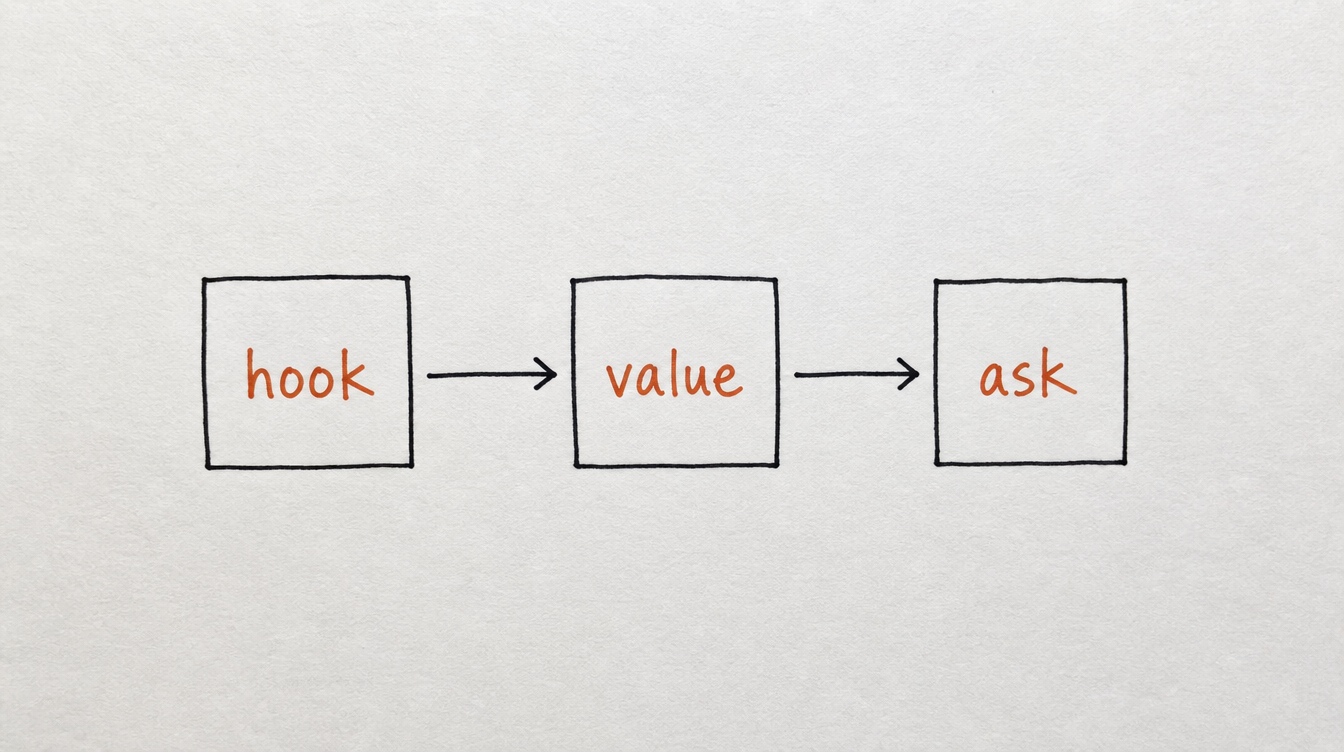
Before the templates, here are the rules that make any welcome sequence work:
- Message 1 arrives fast. Within 5 minutes of joining. Not 24 hours later.
- Each message is under 80 words. Long DMs look like spam. Short DMs look like a friend texting.
- Every message has one clear ask. Reply with your goal. Click this link. Introduce yourself here.
- Conditions stop the sequence when it's no longer needed. If they replied or posted, don't keep sending "hey are you there?" messages.
- The tone matches your community. If your community is casual, the DM should be casual. If it's professional, match that energy.
3. Sequence #1: The Simple 3-Message Onboarding (Paid Community)
Best for: paid Skool communities ($29-$299/month) where members expect a clear path to value.
Trigger: member joins
Message 1 (immediate):
Hey {{first_name}}! Welcome to [community name].

You just made a great decision. Here's the fastest way
to get value this week:

1. Introduce yourself here: [link to intro thread]
2. Start Module 1: [link to classroom]

What's the #1 thing you're hoping to achieve here?
(Just reply, I read every one.)
Message 2 (day 2, only if no reply):
Hey {{first_name}}, quick follow-up.

If you haven't started yet, no worries. Most members
find [specific module or resource] the best place to
begin.

Here's the direct link: [link]

Any questions, just reply here.
Message 3 (day 5, only if no post yet):
Hey {{first_name}}, one more nudge.

This week's [wins thread / help thread] is a low-pressure
way to jump in: [link]

Even one sentence counts. No pressure to have it all
figured out.
Exit condition: member replies to any message OR makes their first post.
4. Sequence #2: The Lead-Nurture Welcome (Free Community)
Best for: free Skool communities that funnel into a paid offer.
Trigger: member joins
Message 1 (immediate):
Hey {{first_name}}, welcome!

Quick question: what brought you here?

A) I want to learn [topic]
B) I'm looking for accountability
C) I'm checking out [paid offer name]
D) Something else

Just reply with the letter and I'll point you to the
right stuff.
Message 2 (day 3, only if no reply):
Hey {{first_name}}, no pressure on the last message.

If you want a quick win, check out this thread: [link
to your best free resource or most popular post]

It's the most popular post in the community for a reason.
Message 3 (day 7, to everyone who replied "C"):
Hey {{first_name}}, since you mentioned you're interested
in [paid offer]:

Here's a quick overview of what's inside: [link]

If you have questions before jumping in, just ask.
No sales pitch, just happy to answer honestly.
Exit condition: member replies OR clicks link (tracked via goal check).
Branch logic: reply "A" or "B" gets educational follow-ups. Reply "C" gets offer-focused follow-ups.
5. Sequence #3: The Course-Based Onboarding
Best for: communities with a classroom/course component where completion drives retention.
Trigger: member joins
Message 1 (immediate):
Hey {{first_name}}, welcome!

The #1 thing that separates members who get results
from those who don't: they start Module 1 in the first
48 hours.

Here's the link: [classroom link]

It takes about 15 minutes. Let me know when you finish
and I'll unlock the bonus resource.
Message 2 (day 3, only if Module 1 not completed):
Hey {{first_name}}, just checking: did you get a chance
to start Module 1?

If something's blocking you or you're not sure where
to begin, reply here and I'll help.

Link again: [classroom link]
Message 3 (triggered when Module 1 is completed):
Nice work finishing Module 1, {{first_name}}!

Here's the bonus I mentioned: [link to bonus resource]

Module 2 builds directly on what you just learned.
When you're ready: [link to Module 2]

You're ahead of 70% of members already. Keep going.
Exit condition: completion of Module 2 (they're now self-motivated).
Goal check: monitors classroom progress, not just replies.
6. Sequence #4: The Cohort Welcome (Group Programs)
Best for: time-bound programs, challenges, or cohort-based communities.
Trigger: member joins (or cohort start date)
Message 1 (immediate):
Hey {{first_name}}, welcome to [cohort/challenge name]!

Here's what happens this week:
- Day 1 (today): Introduce yourself in the thread [link]
- Day 2: First assignment drops
- Day 3: Live Q&A at [time]

Your one task right now: post your intro. Takes 30 seconds.
Message 2 (day 2, morning):
Day 2, {{first_name}}!

Today's assignment just dropped: [link]

It should take about [X] minutes. Post your result in
the thread when done. The group feedback is the best
part.
Message 3 (day 4, only if they haven't posted):
Hey {{first_name}}, noticed you haven't posted yet.

You're not behind. The assignments are designed so you
can catch up in one sitting.

Start here: [link to Day 1 assignment]

The group is super supportive. Nobody judges late starters.
Exit condition: member posts in challenge thread.
7. Sequence #5: The Segmentation Sequence
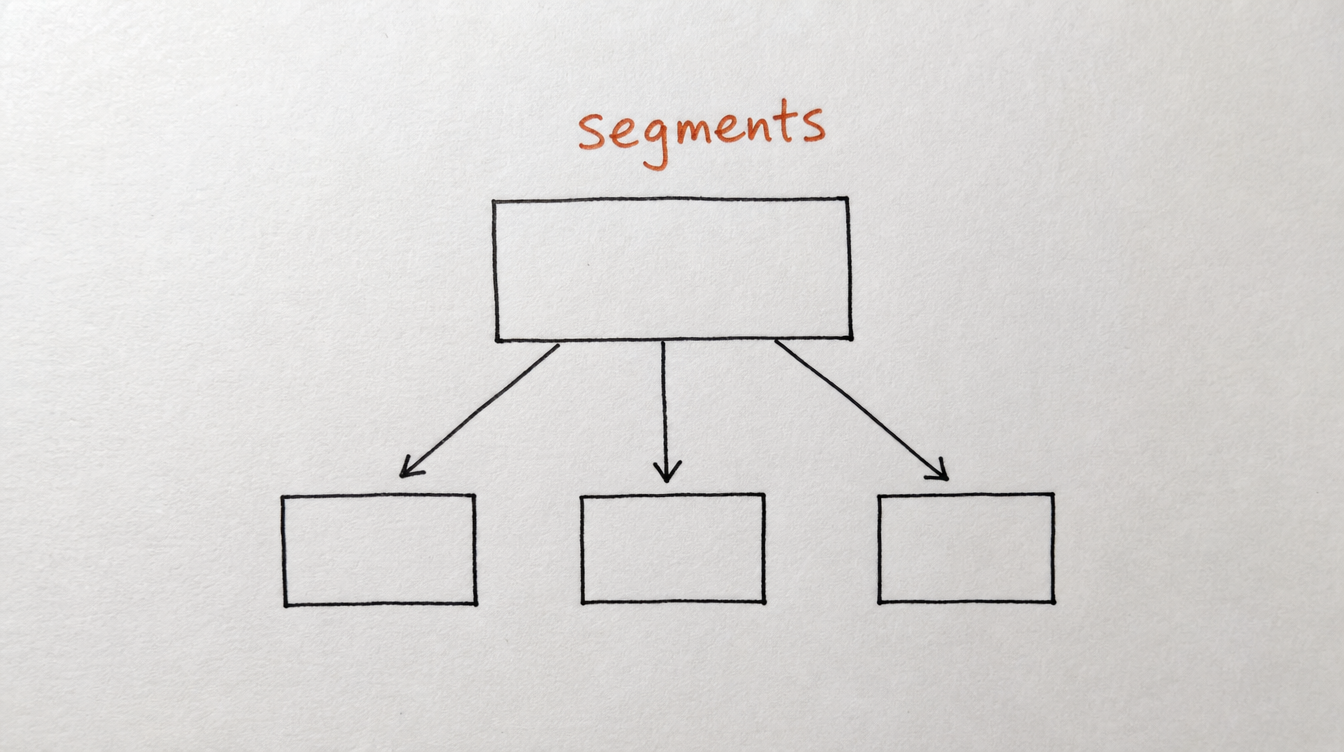
Best for: communities with multiple member types (beginners, advanced, different goals) who need different paths.
Trigger: member joins
Message 1 (immediate):
Hey {{first_name}}, welcome!

Quick question so I can point you to the right resources:

Where are you at right now?

1) Just starting out (under 3 months in [topic])
2) Got some traction but want to scale
3) Experienced, looking for advanced strategies

Just reply 1, 2, or 3.
Branch A (replied "1" - beginner):
Got it! Here's your best starting path:

1. Start with Module 1 (foundations): [link]
2. Join the weekly help thread every Wednesday: [link]
3. Don't try to do everything. Focus on [one specific outcome] first.

Questions? Just reply here anytime.
Branch B (replied "2" - intermediate):
Nice, you've got momentum.

Skip the basics. Here's what'll move the needle for you:

1. Module 4 (scaling): [link]
2. The case study thread: [link]
3. Post your current numbers in the feedback channel
   and the group will help you find the bottleneck.
Branch C (replied "3" - advanced):
Welcome, {{first_name}}. Great to have someone at your
level in here.

A few things for you:
1. The advanced-only thread: [link]
2. Monthly mastermind calls (next one: [date]): [link]
3. If you want to contribute or mentor, let me know.
   We spotlight experienced members who help others.
Auto-tag: reply triggers a tag ("beginner," "intermediate," "advanced") that can drive future content and workflow targeting.
8. Sequence #6: The Accountability Kickstart
Best for: fitness, business, productivity, or any goal-oriented community where members need to commit to action.
Trigger: member joins
Message 1 (immediate):
Hey {{first_name}}, welcome!

This community works best when you declare what you're
working toward. So here's my ask:

Reply with ONE goal you want to hit in the next 30 days.

Keep it specific. "Lose 5 lbs" or "publish my first
newsletter" or "close 3 clients."

I'll check in on you in a week.
Message 2 (day 7):
Hey {{first_name}}, week 1 check-in.

You said your 30-day goal was: [their reply / or "you
haven't shared one yet"].

How's it going? Any blockers?

Reply with:
- On track
- Stuck on something
- Changed my goal

I'll reply personally.
Message 3 (day 14):
Halfway check-in, {{first_name}}.

Two weeks in. Quick pulse:

1) What's one thing that went well?
2) What's your biggest blocker right now?

If you want group help, post it in the help thread: [link]
The community is great at unblocking people fast.
Exit condition: member posts in community (they're now self-directed).
9. Sequence #7: The Re-Engagement Rescue (For Members Who Go Silent)
Best for: any community. This isn't a welcome sequence, it's what runs when a member stops showing up.
Trigger: member inactive for 10+ days
Message 1 (day 10 of silence):
Hey {{first_name}}, noticed it's been a bit since you
were around.

Everything good? No agenda here, just checking in.

If there's something we could do better, I'd like to
know.
Message 2 (day 17, if no reply and no activity):
Hey {{first_name}}, last nudge from me.

This week's thread might be useful for you: [link to
relevant recent thread]

If the community isn't the right fit right now, totally
fine. But if you're just busy, we'll be here when you're
ready.
Message 3 (day 24, if still silent - admin alert only):
This step doesn't message the member. Instead, it sends a Slack/email alert to you: "{{member_name}} has been inactive for 24 days and hasn't replied to re-engagement. Consider personal outreach or accept likely churn."
Exit condition: member replies or posts. If neither happens after message 2, escalate to manual.
For a deeper dive on churn signals and when to intervene, see: How to spot members about to cancel.
10. How to Automate These With StickyHive
Every sequence above can run automatically in StickyHive's DM sequence builder. You set it up once and it runs for every member who matches the trigger.
What the builder gives you:
- Visual sequence editor: drag steps, set delays, add conditions
- Trigger options: member joins, gets tagged, goes inactive, completes module, replies to a DM
- Branching: if/then logic based on replies, activity, or tags
- Goal checks: auto-exit the sequence when the member takes the target action
- A/B testing: test two message variants and keep the one with higher reply rates
- Auto-tagging: tag members based on their replies for future segmentation
You don't need to remember to DM anyone. The system handles it while you focus on content and community building.
Start Free 14-Day Trial (no card required) →
11. Frequently Asked Questions
How long should a welcome DM sequence be?
3-5 messages over 7-14 days is the sweet spot. Enough to make an impression without being annoying. The key is using conditions so engaged members exit early and only silent members receive all messages.
Should I use the member's first name in automated DMs?
Yes. Always. A DM that starts with "Hey there!" feels like a mass blast. "Hey Sarah!" feels like a personal message. Merge tags make this easy.
What if a member asks a question in their reply?
You answer it personally. Automated sequences handle the outreach. Actual conversations still happen between humans. That's the whole point: the automation gets the conversation started, you take it from there.
Can I use the same sequence for free and paid communities?
The structure is the same but the content should differ. Paid members expect a clear path to value (ROI on their investment). Free members need a reason to stick around and eventually upgrade. Use Sequence #1 for paid and Sequence #2 for free.
What reply rate should I expect from welcome DMs?
A good welcome DM gets 25-40% reply rates. If you're below 20%, your message is too long, too generic, or asking for too much. Simplify the ask.
12. Conclusion and Next Steps
You now have 7 complete sequences ready to use. Pick the one that matches your community type and set it up today.
Your next steps:
- Pick one sequence from above (start with #1 or #2 depending on paid vs. free)
- Customize the templates with your community name, links, and tone
- Set up the trigger and activate it
- Monitor reply rates for 2 weeks
- Add a second sequence (the re-engagement rescue is a great #2)
Related reading: